Legendary
Rembrandt van Rijn
Painted The Night Watch and nearly a hundred self-portraits, and made light and shadow tell the story.
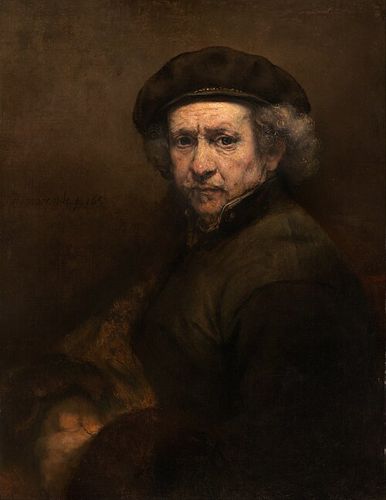
1606 Leiden – 1669 Amsterdam · Dutch Republic
Who they were
A miller's son from Leiden who became the most sought-after portrait painter in Amsterdam in the 1630s, then lost his house and possessions to bankruptcy in 1656 and kept painting until his death. He worked in oil, etching and drawing, and ran a large workshop of pupils.
What they found or built
The Anatomy Lesson of Dr Nicolaes Tulp (1632) made his name: a group portrait that shows a public dissection as a moment of attention rather than a row of faces.
The Night Watch (1642) shows Captain Frans Banninck Cocq's militia company marching out. It got its nickname later, when darkened varnish made the daytime scene look like night.
He made around 300 etchings and turned the copper plate into a medium of its own, reworking plates through many states.
His self-portraits, painted and etched across forty years, are a record of one face ageing, from a confident young man to the late, unflattering portraits of the 1660s.
Why it mattered
Chiaroscuro, the strong contrast of light and dark, is how he directed the eye: light falls where the meaning is. Painters, photographers and film-makers still light faces the way he did.
His late work, made after he had lost fortune and family, shows that a painter's best work can come when nothing about it is fashionable.
Sayings we left out
Rembrandt left almost no writing about his art: only seven letters survive, all to Constantijn Huygens, so sayings attributed to him online are not his.
Many paintings once called Rembrandt are now given to his pupils; the Rembrandt Research Project spent decades sorting them.