Quantum Computing
David Deutsch
Defined the universal quantum computer and the first quantum algorithms.
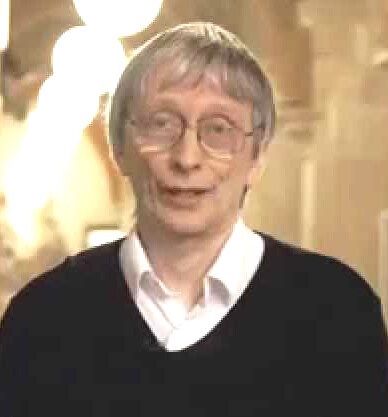
born 1953, Haifa · Israel, working in the United Kingdom
Who they were
A physicist at Oxford who has spent his career on the foundations of quantum theory, and who is among the most committed supporters of the many-worlds view of Everett.
What they found or built
His 1985 paper 'Quantum theory, the Church–Turing principle and the universal quantum computer' defined what a quantum computer is in general, and showed that such a machine could in principle simulate any physical process. Along with Richard Jozsa he published in 1992 the Deutsch–Jozsa algorithm, the first example of a problem a quantum computer solves with exponentially fewer steps than a deterministic classical one. The problem was artificial, but the principle that interference between computational paths can answer a global question at once was real.
He also developed the idea of the quantum circuit with gates, the language of nearly all quantum algorithms, and later, with Chiara Marletto, constructor theory.
Why it mattered
Deutsch moved the subject from 'can it be done' to 'what is it for', giving later algorithms their frame. He shared the 2023 Breakthrough Prize in Fundamental Physics with Bennett, Brassard and Shor. His book The Fabric of Reality (1997) argues that a quantum computer is itself evidence of the many-worlds picture, a claim that physicists dispute.
Equations and key ideas
- The universal quantum computer
- Quantum parallelism
- Deutsch–Jozsa
Connected to
Richard Feynman · Hugh Everett III · Peter Shor · Paul Benioff