Quantum Mechanics · Quantum Computing
John Clauser, Alain Aspect and Anton Zeilinger
Tested Bell's inequality and showed the quantum world is not locally real; Nobel Prize in Physics 2022.
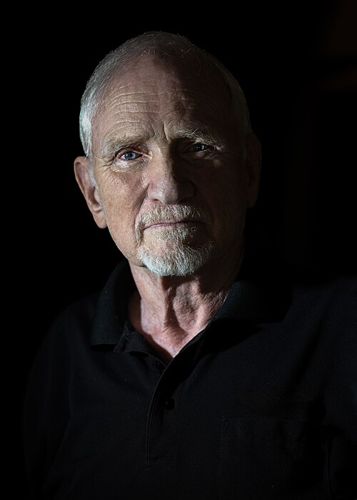
Clauser b. 1942, United States · Aspect b. 1947, France · Zeilinger b. 1945, Austria · United States, France and Austria
Who they were
Three experimentalists who turned a philosophical argument into a laboratory result, sharing the 2022 Nobel Prize for experiments with entangled photons, establishing the violation of Bell inequalities and pioneering quantum information science.
What they found or built
Clauser, with Stuart Freedman, performed the first Bell test in 1972 at Berkeley (building on the 1969 CHSH proposal he co-wrote), when the subject was so unfashionable that he struggled to find support for it. Aspect, in Orsay in 1981–82, improved the test by switching the measurement settings while the photons were in flight, closing a loophole. Zeilinger's Vienna group pushed to larger distances, to teleportation (1997), and, with other groups, to loophole-free tests in 2015.
Why it mattered
The results say that no theory in which each particle carries its own pre-set answers and nothing travels faster than light can account for what we see. How to read that remains disputed, but the experiments are not. The same techniques, entangled photons sent over fibre and by satellite, are the foundation of quantum communication and cryptography.
Equations and key ideas
- The Bell (CHSH) inequality: |S| ≤ 2 classically, up to 2√2 in quantum theory
- An entangled pair (a Bell state): |Φ⁺⟩ = (|00⟩ + |11⟩) / √2
- Bell tests
- Entangled photons
- Quantum teleportation
Connected to
John Stewart Bell · Albert Einstein · Chien-Shiung Wu · Charles Bennett and Gilles Brassard