Quantum Mechanics
David Bohm
Showed that quantum mechanics can be completed with particles that have definite positions.
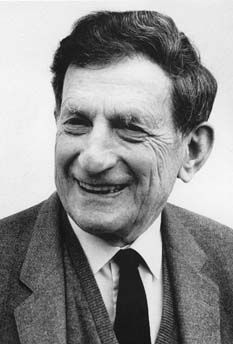
1917 Wilkes-Barre – 1992 London · United States, later Brazil, Israel and Britain
Who they were
An American physicist who studied under Oppenheimer. Called before the House Un-American Activities Committee in 1949, he refused to testify against colleagues, lost his post at Princeton, and spent the rest of his life abroad: São Paulo, Haifa, Bristol and finally Birkbeck College in London.
What they found or built
In 1952 he published a theory showing that de Broglie's pilot-wave picture could reproduce all the predictions of quantum mechanics. In it, particles have real positions at all times and are guided by a wave function, while the apparent randomness comes from ignorance of those positions. It proved that the 'impossibility proofs' for hidden variables were not as general as claimed. With Yakir Aharonov he also predicted the Aharonov–Bohm effect (1959).
Why it mattered
Bohm's theory was ignored for decades, but it inspired John Bell to ask what any such theory must be like, and Bell found that it must be non-local: what happens here depends instantly on what is done there. Bohmian mechanics is now a respected alternative to Copenhagen and many-worlds, and a reminder that the standard story is not forced on us by the data.
Equations and key ideas
- Pilot-wave theory
- Hidden variables
- Non-locality