Quantum Mechanics
Max Planck
Started the quantum revolution by finding that energy comes in packets.
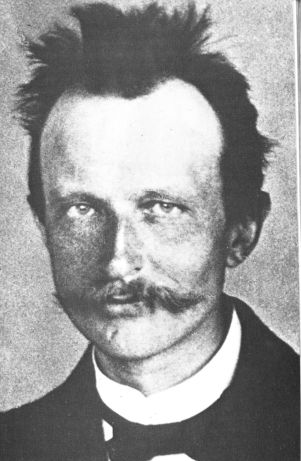
1858 Kiel – 1947 Göttingen · Germany
Who they were
A conservative, deeply cultured German physicist who played piano well enough to consider music as a career. By 1900 he was a professor in Berlin, working on a stubborn problem: why does a hot object glow the colours it does?
What they found or built
Classical physics predicted that a hot cavity should shine with infinite energy at short wavelengths, an absurdity. In October 1900 Planck found a formula that matched the measurements exactly; in December he presented a derivation to the German Physical Society. To get it, he had to assume that the tiny oscillators in the walls could only exchange energy in lumps of size hν, with a new constant h.
Planck regarded this as an accounting trick, not a statement about nature, and spent years trying to avoid its implications. It was Einstein in 1905 who insisted the lumps were real.
Why it mattered
Planck's constant h now sets the scale at which the everyday world gives way to the quantum one. Since 2019 its value is exact and defines the kilogram. Almost every later step in this story, from Bohr's atom to the laser, grows from the idea that Planck reluctantly introduced.
He stayed in Germany through the Nazi years, tried and failed to protect Jewish colleagues, and lost his son Erwin, executed in 1945 for the 1944 plot against Hitler. He won the Nobel Prize in 1918.
Sayings we left out
The saying that science advances one funeral at a time is usually credited to Planck. What he wrote, in his Scientific Autobiography (1948), is a longer remark that a new truth triumphs not by convincing opponents but because they eventually die and a new generation grows up familiar with it. The short version is a paraphrase.
Equations and key ideas
- Quantisation
- Black-body radiation
- The Planck constant