Lawyer · Deputy · Committee of Public Safety
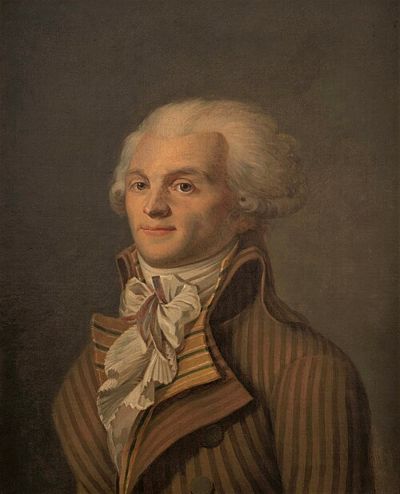
Maximilien Robespierre
1758 – 1794 · Arras → Paris → the guillotine
He began as a lawyer who would not sign a death sentence and ended as the name of the Terror. Between those two points stands the hardest question in politics: what may a revolution do to keep itself?
- 1789Estates-General
- 1792the Republic
- 1793Public Safety
- 17949 Thermidor
The Incorruptible
At Arras he defended the poor, argued against the death penalty, and resigned a judge's post rather than sign one. In Paris he spoke for the unrepresented and for Rousseau's principle: sovereignty belongs to the people and cannot be handed to a king, a chamber, or a party. They called him the Incorruptible because no bribe was ever found that worked on him — and because, like Rousseau's citizen, he seemed to want only the public good.
That is exactly the danger his life demonstrates. A corrupt tyrant can be bought off; a sincere one cannot be argued off. When he came to believe the Republic's enemies were everywhere, no self-interest stayed his hand — because there was none.
“Death is the beginning of immortality.”
Virtue and terror
In February 1794 he told the Convention that the Revolution's engine was virtue in peacetime and virtue armed with terror in war — terror being only prompt, severe, inflexible justice. Rousseau had described a sovereign people; Robespierre appointed the Committee to act in its name, and the guillotine to enforce it.
35%
vigilance
16%
inside the band
The mechanism feeds on itself. Every purge proves the conspiracy was real — look how many were found — and narrows the band of the acceptable further. In June 1794 the Law of 22 Prairial removed defense counsel and broadened the capital charge to ‘enemy of the people.’ Six weeks later the Convention arrested him rather than wait to be named.
“Terror is naught but prompt, severe, inflexible justice; it is therefore an emanation of virtue.”
Built on, and against, Robespierre
Every revolution after him has had to answer the same question he poses: if the people are sovereign, who speaks for them before they speak — and what happens to whoever is declared outside the general will?
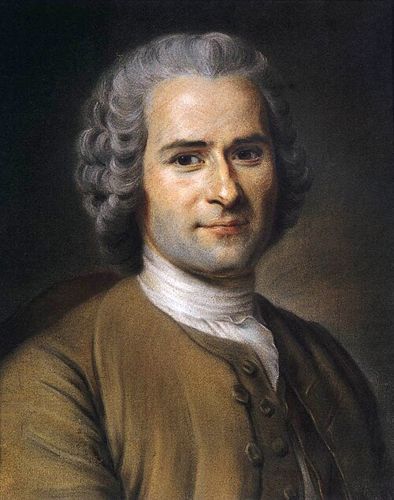
Jean-Jacques Rousseau
1712 – 1778
His source and his defense. Robespierre claimed every measure enacted the general will Rousseau described — the page where that idea lives, and the book the Terror claimed to apply.
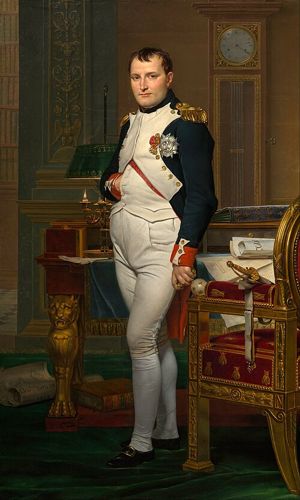
Napoleon Bonaparte
1769 – 1821
Rose in the vacuum Thermidor opened. Where Robespierre tried to make citizens virtuous, Napoleon made them soldiers and citizens of a code — then crowned himself what the Revolution had overthrown.
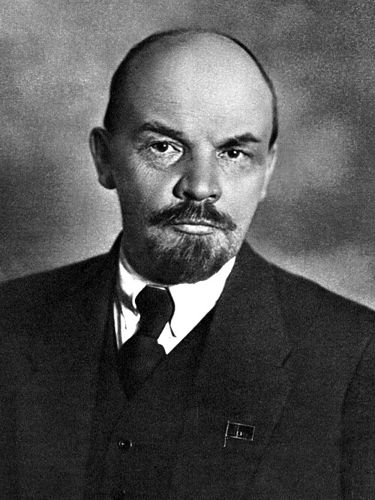
Vladimir Lenin
1870 – 1924
Studied the Jacobins deliberately and accepted the comparison: a party acting as the armed conscience of a class, terror as an instrument of the transition. The line runs straight from the Committee to the Cheka.
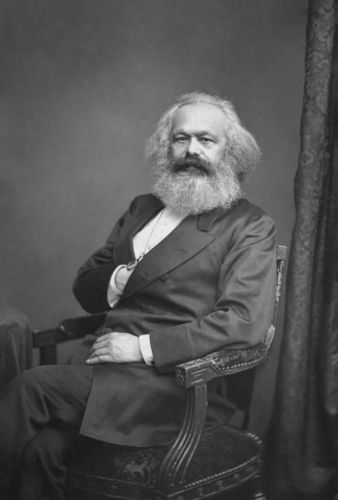
Karl Marx
1818 – 1883
Read the Terror as a class tragedy: Robespierre tried to force a modern economy into an ancient republic of virtue, and 'the more the reign of virtue had to be asserted, the more terror had to reign.'
“We wish to substitute in our country morality for egotism, probity for honour, principles for conventions, the empire of reason for the tyranny of fashion.”