Earth 1

Ideas you can turn

Thinkers

Drag a ring to change its input.

Evidence

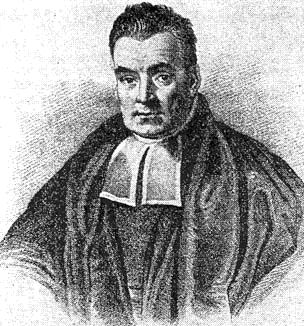
Portrait of Thomas Bayes

Thomas Bayes

1701 – 1761

P(H|E) = P(E|H) · P(H) / P(E)

Richard Price published his essay in 1763, two years after Bayes died. It shows how far one piece of evidence should move a belief. Here the evidence turns up 90% of the time when the belief is true, and 20% when it is false.
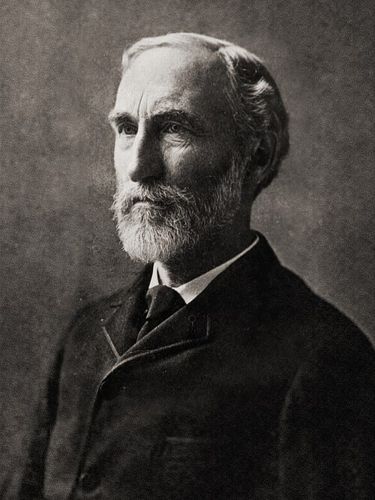
Portrait of J. Willard Gibbs

J. Willard Gibbs

1839 – 1903

ΔG = ΔH − TΔS

A change happens on its own when ΔG is below zero. Ice needs 6.01 kJ per mole to melt (ΔH) but gains disorder (ΔS = 22 J/K), so above 273 K the TΔS term wins and the lattice falls apart. Yale gave him America's first engineering PhD in 1863.

Graham Weaver

Alpine Investors, 2001

V = (1 + r)ᵗ

Founded Alpine Investors in 2001 and teaches at Stanford GSB. The case for long horizons is arithmetic: at 10% a year money doubles about every 7.3 years and grows 45-fold in 40. Each white dot is one doubling.

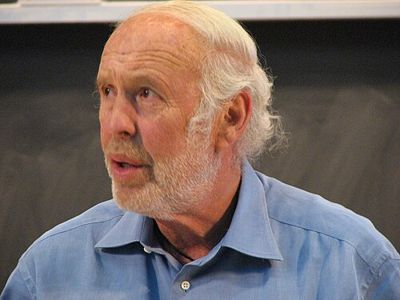
Portrait of Jim Simons

Jim Simons

1938 – 2024

P(ahead) ≈ Φ((2p − 1)·√n)

Geometer of the Chern–Simons forms (1974) and a codebreaker at the Institute for Defense Analyses until 1968. He founded Renaissance Technologies in 1982; its Medallion fund averaged about 66% a year before fees from 1988 to 2018. Robert Mercer put the edge at being right 50.75% of the time: a coin flip on one bet, near-certain over a million.

Augustine of Hippo

354 – 430

share = 50 mL/s · t / V_sea

Bishop of Hippo in Roman Africa. His Confessions (c. 400) recall stealing pears as a boy for the thrill of it; The City of God answered the sack of Rome in 410. Si fallor, sum: if I am mistaken, I exist (City of God XI.26), twelve centuries before Descartes. A medieval legend puts him on a beach, puzzling over the Trinity, beside a boy pouring the sea into a hole with a shell. At 50 mL a second the boy never empties its 1.335 × 10²¹ litres.

“You have made us for yourself, and our heart is restless until it rests in you.”
Confessions, Book I

Cost

Portrait of Ronald Coase

Ronald Coase

1910 – 2013

If rights are clear and bargaining is cheap, the two sides reach the efficient deal whoever holds the right. When bargaining costs more than the deal is worth, it never happens. Nobel Prize, 1991.

“We are dealing with a problem of a reciprocal nature.”
The Problem of Social Cost, 1960

Arthur Pigou

1877 – 1959

In The Economics of Welfare (1920) a factory's smoke costs neighbours money the factory never pays, so it makes too much. A tax equal to that harm brings output down to what society would choose. The shaded triangle is the welfare lost: it vanishes when tax = harm.

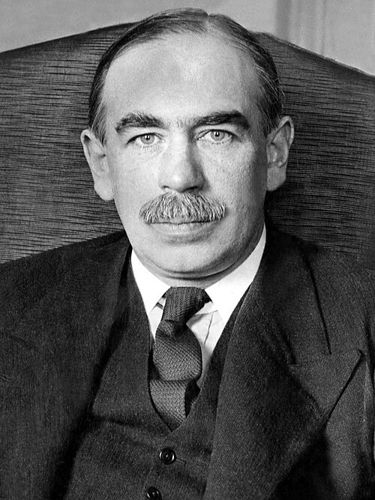
Portrait of John Maynard Keynes

John Maynard Keynes

1883 – 1946

k = 1 / (1 − MPC)

The General Theory (1936): one pound spent is someone's income, and they spend part of it again. If each round spends a share MPC, the rounds add up to 1/(1 − MPC) pounds.

“In the long run we are all dead.”
A Tract on Monetary Reform, 1923

Power

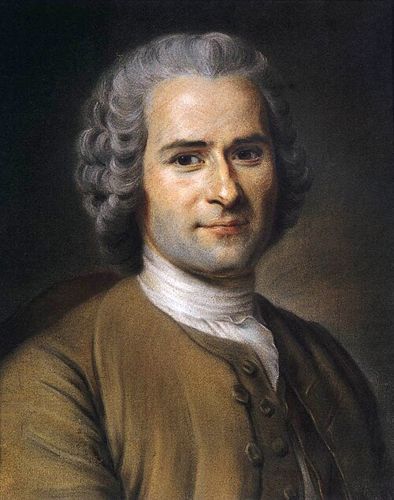
Portrait of Jean-Jacques Rousseau

Jean-Jacques Rousseau

1712 – 1778

The Social Contract (1762): law is legitimate when it follows the general will, what citizens want for the common good. Each arrow is one person's will; the long arrow is what they share.

“Man is born free, and everywhere he is in chains.”
The Social Contract, 1762
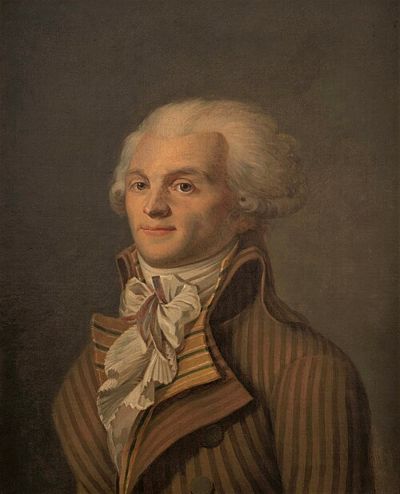
Portrait of Maximilien Robespierre

Maximilien Robespierre

1758 – 1794

A disciple of Rousseau, he led the Committee of Public Safety through the Terror of 1793–94: about 17,000 official death sentences. The Convention sent him to the guillotine on 28 July 1794.

“Terror is nothing other than justice, prompt, severe, inflexible.”
Speech to the Convention, 5 February 1794
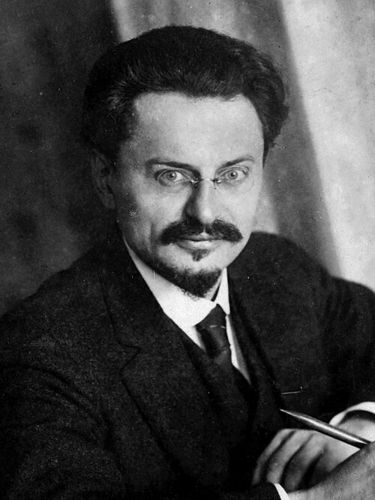
Portrait of Leon Trotsky

Leon Trotsky

1879 – 1940

Born Lev Bronstein. He ran the Military Revolutionary Committee that took Petrograd in October 1917, then built the Red Army as war commissar. Permanent revolution: a revolution must spread abroad or die. Stalin answered with socialism in one country, exiled him in 1929, and an NKVD agent killed him in Mexico in 1940. Orwell modelled Emmanuel Goldstein in Nineteen Eighty-Four on him.

1984 → Jobs
“Life is beautiful. Let the future generations cleanse it of all evil, oppression and violence, and enjoy it to the full.”
Testament, 27 February 1940
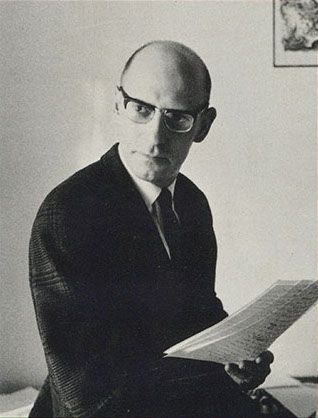
Portrait of Michel Foucault

Michel Foucault

1926 – 1984

Discipline and Punish (1975) takes Bentham's Panopticon: one tower that can see every cell. Prisoners who cannot tell whether they are watched behave as if they always are.

“Visibility is a trap.”
Discipline and Punish, 1975

Build

Portrait of Bauhaus

Bauhaus

1919 – 1933

Walter Gropius founded it in Weimar in 1919; it moved to Dessau in 1925 and Berlin in 1932, and closed under Nazi pressure in 1933. Kandinsky's 1923 survey paired yellow with the triangle, red with the square and blue with the circle.

“Together let us desire, conceive, and create the new structure of the future.”
Walter Gropius, Bauhaus Manifesto, 1919
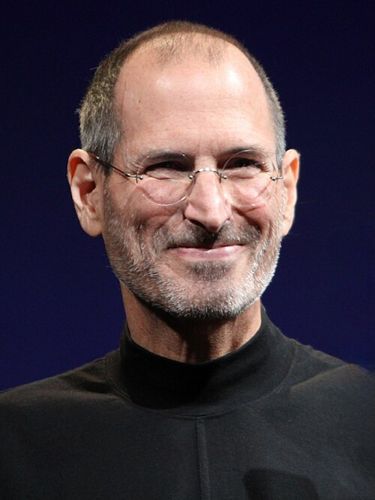
Portrait of Steve Jobs

Steve Jobs

1955 – 2011

Bud Tribble named Jobs's reality distortion field at Apple in 1981, borrowing the phrase from Star Trek: his certainty bent a team's sense of what could ship, and the Macintosh did. Its launch ad, aired on 22 January 1984, shows a runner smashing Big Brother's screen.

Trotsky → 1984
“The only way to do great work is to love what you do.”
Stanford commencement, 2005
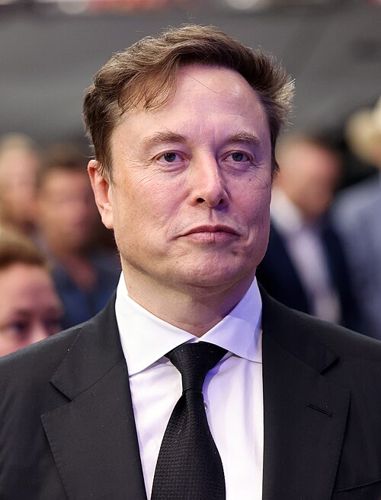
Portrait of Elon Musk

Elon Musk

born 1971

Walter Isaacson's 2023 biography records his algorithm, run in order: question every requirement, delete parts, simplify, accelerate, automate. A surge is an all-hands push on one bottleneck, such as Model 3 production in 2018.

“The best part is no part.”
Starbase tour with Everyday Astronaut, 2021